

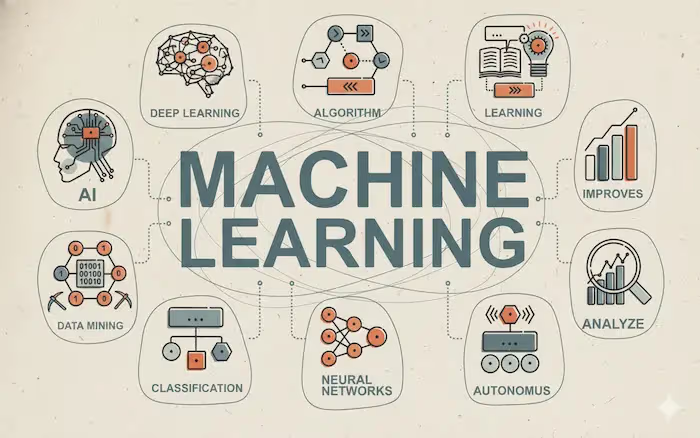
Diagnostic medicine is undergoing a profound transformation, driven by unprecedented advancements in Artificial Intelligence (AI) and Machine Learning (ML). These technologies are not merely incremental improvements; they are fundamentally redefining how diseases are detected, classified, and managed. By analyzing vast datasets with speed and precision far surpassing human capabilities, AI is empowering healthcare professionals to make more accurate, timely, and personalized diagnoses, ultimately saving lives and improving patient outcomes.
Historically, medical diagnosis has relied heavily on the expertise, intuition, and experience of clinicians. While human judgment remains essential, it is subject to limitations: fatigue, cognitive bias, and the sheer volume of data inherent in modern healthcare. The explosion of digital health information, encompassing electronic health records (EHRs), medical imaging, genomic data, and wearable device outputs, presents a significant challenge. Human minds are simply not equipped to process and interpret this complex, multi-dimensional information efficiently. AI and ML algorithms excels at recognizing intricate patterns within massive datasets, identifying subtle anomalies that might escape even the most experienced eyes.
The primary driver of AI’s transformative impact in diagnostics is its ability to learn from data without being explicitly programmed. ML algorithms are trained on enormous, annotated medical datasets, enabling them to identify complex relationships and make predictions. This capability is applied across diverse medical specialties, from radiology and pathology to cardiology and oncology.
Transforming Medical Imaging and Radiology
Medical imaging is perhaps the field most significantly impacted by AI. Algorithms, particularly deep learning models, are trained to analyze X-rays, CT scans, MRIs, and mammograms with remarkable accuracy. These AI systems can automatically detect early signs of diseases that might be missed by human radiologists.
-
Mammography Screening: AI algorithms can analyze mammograms to identify subtle indications of breast cancer, potentially reducing false negatives and enabling earlier intervention. In some clinical settings, AI acts as a second reader, flagging suspicious areas for a radiologist’s review, improving overall screening efficiency and accuracy.
-
CT Scan Interpretation: In emergency settings, speed is critical. AI tools can rapidly analyze CT scans to detect intracranial hemorrhages (brain bleeds) or pulmonary embolisms (blood clots in the lungs), prioritizing these time-sensitive cases for immediate radiologist attention.
-
Early Lung Cancer Detection: AI systems are being developed to analyze chest CT scans for lung nodules, distinguishing between benign and malignant lesions with high precision. Early detection of lung cancer is crucial for improving survival rates.
-
Improving Workflow Efficiency: Beyond image interpretation, AI can optimize radiology workflows by automating routine tasks like image segmentation, quantification of structures, and image quality assessment, freeing up radiologists to focus on complex cases and patient interaction.
Revolutionizing Pathology and Histology
The field of pathology, which involves examining tissue samples under a microscope to diagnose diseases like cancer, is also being revolutionized by AI. Traditional pathology is labor-intensive and subjective, prone to inter-observer variability. Digital pathology, involving the digitization of tissue slides, has paved the way for AI applications.
-
Automated Cancer Detection: AI algorithms can analyze digitized whole-slide images (WSIs) to identify cancerous cells and tissue patterns. In prostate cancer diagnosis, for example, AI tools can automatically detect cancer areas, determine the Gleason grade (a measure of cancer aggressiveness), and quantify the tumor volume, providing pathologists with objective and quantifiable data.
-
Predicting Prognosis and Treatment Response: By analyzing subtle morphological patterns within tissue samples, AI models can predict a patient’s prognosis and likely response to specific therapies. This aids in personalized treatment planning, ensuring patients receive the most effective interventions.
-
Improving Accuracy and Standardization: AI can reduce the subjectivity inherent in pathology, leading to more standardized and reproducible diagnoses. This is particularly valuable in settings with limited access to specialist pathologists.
Enhancing Diagnostics Beyond Imaging
AI’s impact extends far beyond imaging and pathology. It is making significant inroads into diverse areas of diagnostic medicine.
-
Genomics and Personalized Medicine: The sequencing of the human genome has created vast datasets with immense diagnostic potential. AI algorithms are used to analyze genomic data, identifying genetic variants associated with specific diseases and predicting a patient’s risk of developing certain conditions. This enables early prevention strategies and the development of targeted therapies.
-
Cardiology and ECG Analysis: AI models can analyze electrocardiograms (ECGs) to detect subtle arrhythmias, signs of heart failure, or even genetic heart conditions that might not be apparent to the naked eye. Early detection of these conditions allows for timely intervention and prevents adverse cardiovascular events.
-
Analyzing Electronic Health Records (EHRs): EHRs contain a wealth of longitudinal patient data, including medical history, lab results, and medication records. AI algorithms can mine this data to predict disease onset, identify patients at high risk for complications, and assist clinicians in making diagnostic decisions.
-
Analyzing Wearable Device Data: Data from smartwatches and other wearable devices, such as heart rate, activity levels, and sleep patterns, can be analyzed by AI to monitor patient health remotely and detect early signs of deterioration. This is particularly relevant for chronic disease management.
Key Advantages of AI in Diagnostic Medicine
The integration of AI into diagnostics offers numerous significant benefits:
-
Enhanced Diagnostic Accuracy: AI algorithms can detect subtle patterns and anomalies that might be missed by human clinicians, leading to earlier and more accurate diagnoses.
-
Improved Efficiency and Speed: AI can rapidly process and analyze massive datasets, accelerating the diagnostic process and enabling faster treatment decisions.
-
Increased Consistency and Standardization: AI reduces the variability and subjectivity inherent in human interpretation, leading to more standardized and reproducible diagnoses.
-
Early Disease Detection: By identifying subtle indicators of disease in their earliest stages, AI enables timely intervention and improves patient outcomes.
-
Personalized Medicine: AI facilitates the analysis of multi-dimensional patient data, enabling tailored treatment plans based on individual genetic makeup, lifestyle, and medical history.
-
Improved Access to Care: AI-powered diagnostic tools can support clinicians in underserved areas, enhancing diagnostic capabilities and improving access to quality care.
Challenges and Considerations
Despite its immense potential, the widespread adoption of AI in diagnostics faces several challenges:
-
Data Quality and Bias: AI models are only as good as the data they are trained on. Biased or low-quality data can lead to inaccurate predictions and exacerbate existing healthcare disparities. Ensuring diverse, representative, and high-quality training datasets is critical.
-
Interpretability and Transparency: Deep learning models, in particular, are often described as “black boxes,” making it difficult to understand how they arrive at their conclusions. This lack of transparency can hinder trust among clinicians and patients. Developing explainable AI (XAI) is essential.
-
Integration with Clinical Workflows: Seamlessly integrating AI tools into existing clinical workflows is a complex task. AI systems must be user-friendly, inter-operable with EHRs, and not add undue burden to already overworked healthcare professionals.
-
Regulatory and Ethical Considerations: The use of AI in diagnostics raises complex regulatory and ethical questions regarding patient privacy, data security, liability, and the potential for algorithmic bias. Establishing robust ethical guidelines and regulatory frameworks is paramount.
-
Human-AI Collaboration: The goal is not to replace clinicians but to augment their capabilities. Defining the optimal mode of collaboration between humans and AI is crucial for maximizing benefits and ensuring patient safety. Human judgment remains indispensable for interpreting complex clinical contexts and making final treatment decisions.
AI and ML are transforming diagnostic medicine at an accelerating pace. These technologies are no longer science fiction; they are actively reshaping healthcare delivery, enabling earlier, more accurate, and personalized diagnoses. As the field matures, addressing the challenges of data quality, bias, interpretability, and ethical considerations will be vital. The future of diagnostic medicine lies in a synergistic partnership between human expertise and the analytical power of artificial intelligence, ultimately leading to a healthier future for all.
Frequently Asked Questions (FAQ)
1. Will AI replace doctors and radiologists?
No, AI is not intended to replace doctors or radiologists. Its primary role is to augment and support their expertise. AI algorithms excel at rapidly analyzing massive datasets and identifying subtle patterns, which can assist clinicians in making more accurate and timely diagnoses. Human judgment remains essential for interpreting results within the broader clinical context, communicating with patients, and making complex treatment decisions. AI will likely shift the focus of doctors from routine data analysis to more nuanced patient care and complex problem-solving.
2. Is my medical data safe when used by AI diagnostic systems?
Patient data privacy and security are paramount concerns in the development and implementation of AI in healthcare. Robust measures are employed to protect sensitive information, including anonymization of datasets, secure data storage, access controls, and strict adherence to regulations like HIPAA. AI systems typically operate within secure healthcare environments, and data usage is governed by stringent ethical guidelines and legal frameworks. Ensuring data privacy is a foundational element of building trust in AI diagnostic tools.
3. Are AI diagnostic tools as reliable as human doctors?
In many specific tasks, AI diagnostic tools have demonstrated reliability and accuracy comparable to, or even exceeding, that of human experts. In areas like analyzing medical images for cancer detection or ECG interpretation for arrhythmias, AI has shown remarkable performance. However, reliability depends heavily on the quality and diversity of the data used to train the algorithm. It’s crucial to understand that AI excels at specific narrow tasks, while human doctors possess a broader understanding of medicine, patient history, and clinical context, which is essential for comprehensive diagnosis and care.
4. What types of diseases can AI help diagnose?
AI is being applied to help diagnose a wide range of diseases and conditions, including breast cancer, lung cancer, prostate cancer, skin cancer, intracranial hemorrhages, pulmonary embolisms, cardiac arrhythmias, diabetic retinopathy, Alzheimer’s disease, and rare genetic disorders. Research is ongoing to expand AI’s diagnostic capabilities into new areas, from identifying infectious diseases to predicting the likelihood of treatment response in various conditions.
5. How is AI integrated into the standard workflow of a hospital?
AI integration varies depending on the specific application. In radiology, for example, AI software may automatically run in the background, analyzing scans as they are uploaded to the hospital’s Picture Archiving and Communication System (PACS) and flagging suspicious areas for the radiologist to review. In emergency settings, AI might prioritize time-sensitive cases based on image analysis. AI diagnostic tools might also be integrated directly into EHR systems, providing diagnostic support and risk prediction within the patient record. Successful integration requires user-friendly interfaces, seamless inter-operability, and careful consideration of clinical workflows.
6. Who is responsible if an AI makes a wrong diagnosis?
This is a complex legal and ethical question without a simple answer. Currently, the ultimate responsibility for a patient’s diagnosis and treatment rests with the treating physician. AI diagnostic tools are generally intended to function as decision support systems, providing information to clinicians, not making autonomous medical decisions. If a physician disagrees with an AI recommendation, they must exercise their clinical judgment. Legal frameworks are still evolving to address liability issues specifically related to the use of AI in healthcare, but the human clinician remains central to the final decision-making process.
Comments are closed.